
Galaxy Unpacked 2026後:Z Fold 8時代 のデスクセットアップ&Qi2 25W充電ガイド
1. Unpacked 2026の発表内容 — なぜデスク環境が重要なのか
Samsungのサマーイベント「Galaxy Unpacked」(2026年7月22日、ロンドン)では、過去最大規模のフォルダブルラインナップが披露されました。内側のディスプレイがよりワイドな3:4のパスポートサイズとなったGalaxy Z Fold 8、シリーズ初のZ Fold 8 Ultra、Z Flip 8、そしてGalaxy Watch 9およびWatch Ultra 2です(2026年7月22日〜23日、Samsung Newsroom / CNMO)。Fold 8は展開時4.5mm、折りたたみ時9.7mmと非常に薄く、ユーザーはタブレットに手を伸ばすよりも、デスク上に立てかけた端末で直接作業を行うようになるでしょう。

なぜスマートフォンの発表がデスクデザインに関係するのでしょうか。それは、フォルダブル端末が充電のあり方を変えるからです。ブック型のデバイスを直立状態でドッキングさせれば、カレンダーやチャット、ダッシュボードを表示する実用的なサブディスプレイになります。大画面での作業中は電力消費も激しいため、日中の継ぎ足し充電は「オプション」から「ルーチン」へと変わります。もし現在の充電場所がモニター裏のケーブルだとしたら、次世代の端末を使い始めた途端、その弱点が露呈することになるでしょう。
2. Qi2 25W:フォルダブル時代を支える規格
Unpackedのタイミングは絶好です。2026年7月は、Wireless Power Consortium(WPC)が2025年7月に発表したQi v2.2.1に基づく「Qi2 25W」の1周年にあたります。WPCの報告によると、認定を受けたエコシステムは13,000を超えるQi認定製品に達しており、Qi2自体は提供開始から1年で15億台以上の無線デバイスに搭載されました(Wireless Power Consortium, 2026)。25Wのプロファイルは、従来のQi2より約70%も高い電力を供給し、無線充電を「遅い予備手段」ではなく「デスクでのメイン充電方法」へと引き上げます。
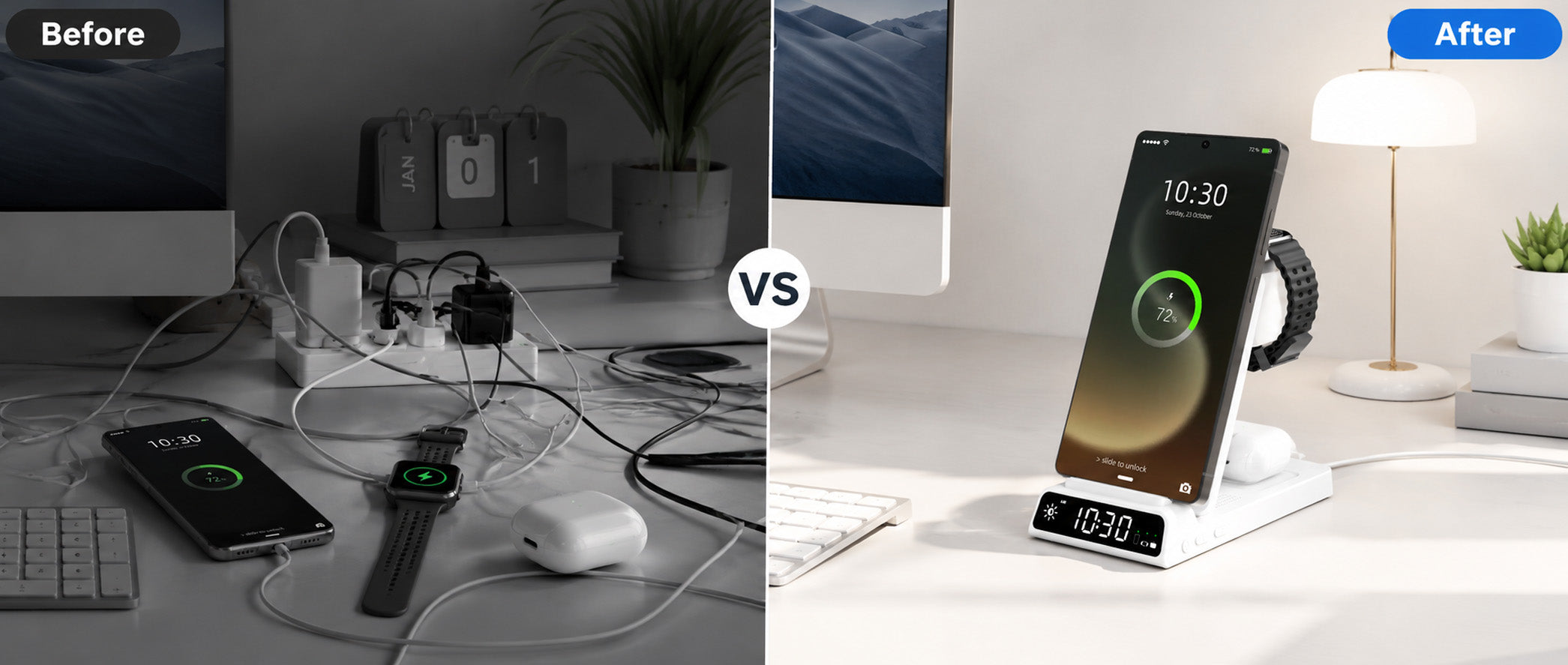
目に見えないメリットは「相互運用性」です。認定により、磁気位置合わせの許容範囲、異物検出、電力ネゴシエーションがすべての準拠端末で一貫して動作することが保証されます。Galaxyのフォルダブル端末、同僚のPixel、iPhoneが同じステーションを共有するような環境でも問題ありません。2026年にワークステーション(またはオフィス全体)の標準化を目指すなら、Qi2 25W認定ハードウェアを購入することが、将来にわたって陳腐化を防ぐ唯一の選択肢となります。
規格比較:デスク環境の変化
| 機能 | Qiベースライン/EPP | Qi2 (15W MPP) | Qi2 25W (Qi v2.2.1) |
|---|---|---|---|
| 最大認定電力 | 5–15W | 15W | 25W |
| 磁気による自動位置合わせ | なし | あり | あり |
| 日中の継ぎ足し充電 | 不向き | 許容範囲 | 強力 — 対応端末で30分で約50%充電可能 |
| エネルギー効率 | 位置に依存 | 高 (コイル位置合わせ) | 最高 (WPC試験基準に基づく) |
| デスクでの役割 | 就寝用パッド | 便利なドック | 主要な充電手段 |
出典:Wireless Power Consortium Qi2 25W メディア資料および認定ドキュメント、2025–2026年。
3. 熱設計:持続的な25W充電に真に必要なもの
「最大ワット数」はマーケティング上の数値に過ぎず、実際に持続できるかどうかがエンジニアリングの成果です。熱による出力低下を起こさず25Wを供給し続けるには、綿密な熱設計が不可欠です。独立した回路を持つ分離型充電ゾーン、コイルごとに隔離されたヒートシンク、通気性の良い金属製シャーシ、そして固定タイマーではなくリアルタイムの温度測定に基づき電力を調整するファームウェアなどが求められます。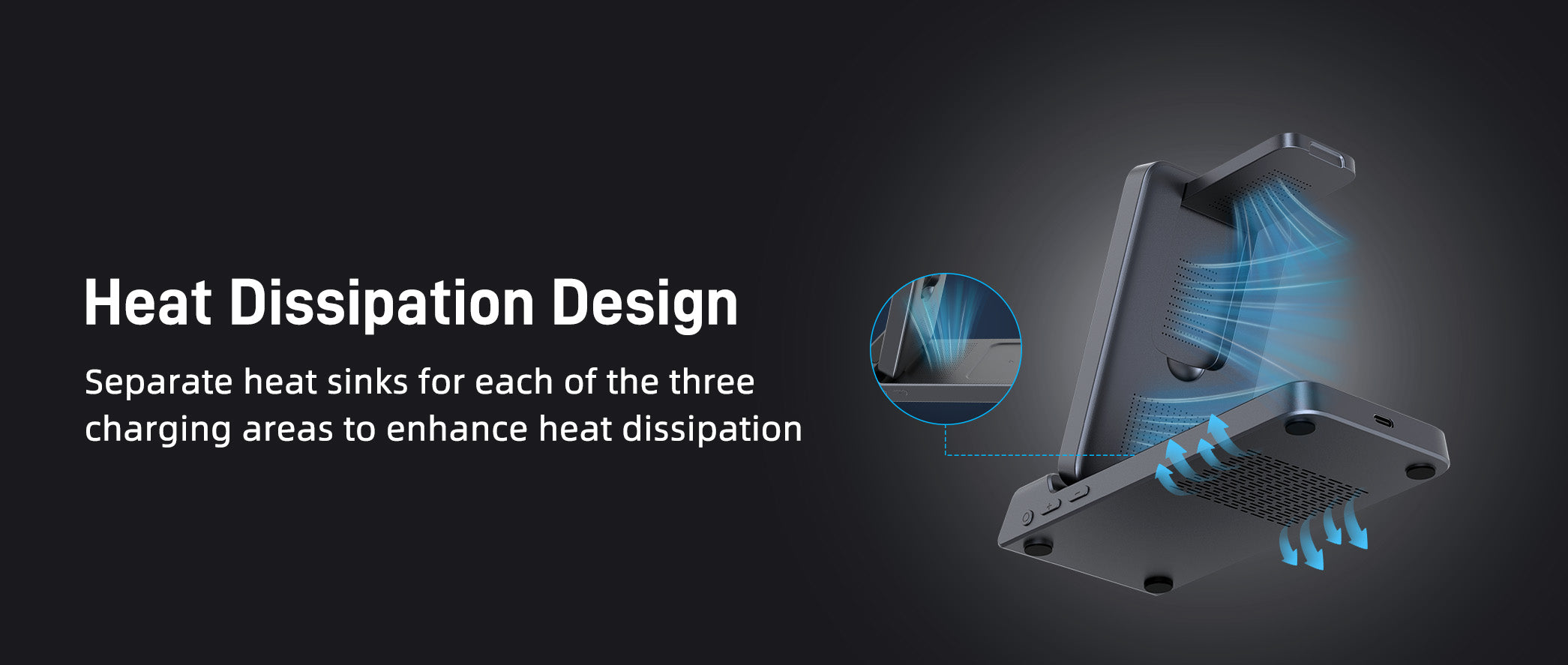
これはフォルダブル端末では特に重要です。2つのセルに分かれた大型バッテリーを搭載し、大画面を使用しながらの充電は、従来のストレート型端末よりも高い発熱をもたらします。ゾーンごとに独立した熱回路を構築したステーションであれば、片方の端末の発熱が隣接する時計やイヤホンの充電に影響を与えるという、よくある失敗を防ぐことができます。3-in-1ステーションを評価する際は、「各ゾーンで独立して排熱管理されているか」をまず確認してください。この答えは、箱に書かれたワット数よりも実効速度を正確に物語ります。認定済みの異物検出機能は、鍵などがコイルの上に置かれた際に瞬時に電力を遮断する、最後の安全層となります。
4. デスクの3ゾーン配置のブループリント
2026年の効率的なデスクには、ワイヤレス充電のための「定位置」が必要です。ブループリントは以下の通りです。3-in-1ステーションをモニター横の視界から30〜45度の「チラ見ゾーン」に設置し、ドッキングしたフォルダブル端末がアンビエントなサブディスプレイとして機能するようにします。キーボードとマウス周辺は完全にケーブルフリーにし、ステーションのUSB-Cケーブルはモニターの配線とまとめてデスク裏に逃がします。
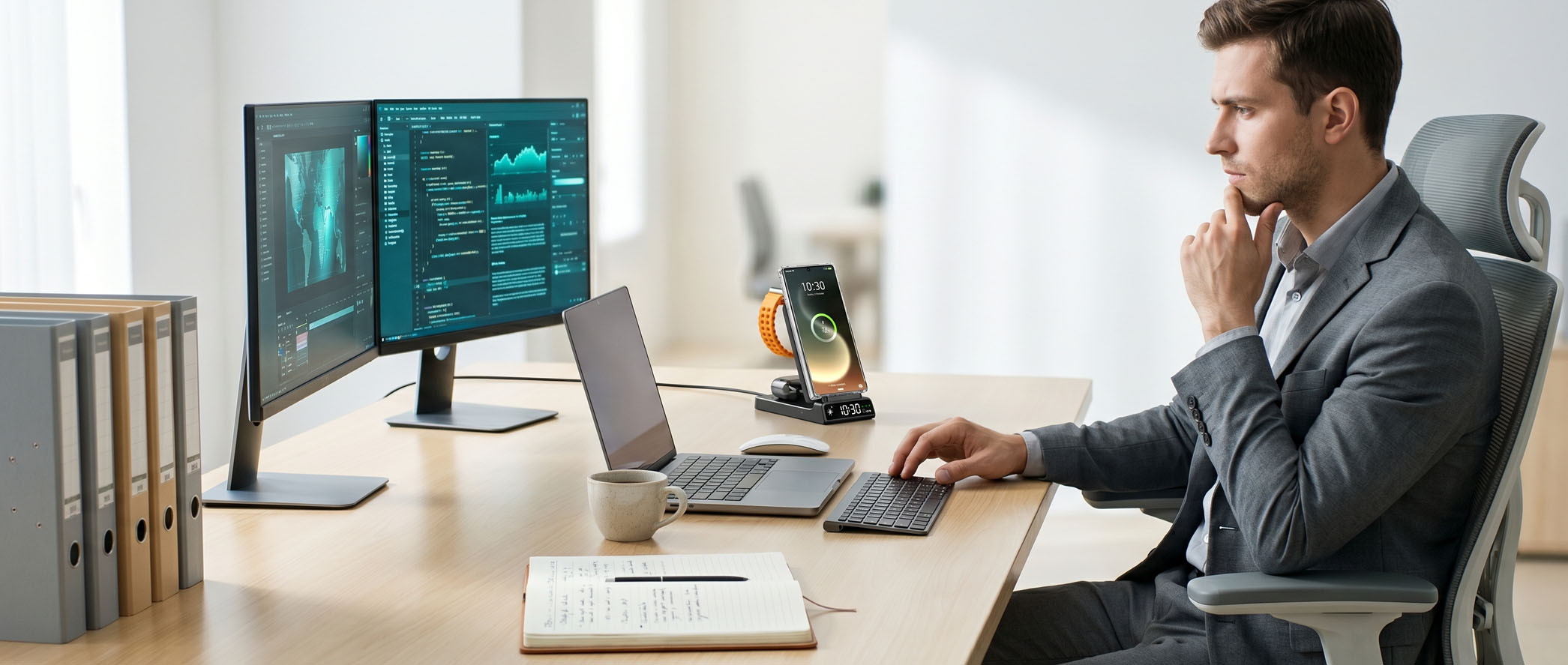
ゾーンの割り当てはデバイスの役割に応じます。25Wの高速ゾーンは、最もバッテリー容量が大きく、会議前の充電が緊急になりやすいスマートフォンに充てます。15Wまたは中速ゾーンはイヤホンのケースやサブ機に、5Wの時計ゾーンは夜間の充電に適しています。そしてシステムを完成させる鍵は「座るたびに置く」という習慣です。磁気位置合わせ機能があれば置く手間はなく、バッテリーは常に60%〜90%の範囲に保たれます。IEEEが公表するバッテリー劣化研究によれば、この範囲を保つことが長期的なバッテリーの健康にとって最適です。
デバイス別デスク充電マップ
| デバイス | 標準バッテリー | 割り当てゾーン | 充電時間帯 | デスクでの動作 |
|---|---|---|---|---|
| フォルダブル端末 (Z Fold 8級) | 4,400–5,000 mAh | 25W高速ゾーン | 着席時、終日 | 直立、サブ画面角度 |
| フリップ型端末 | 4,000–4,300 mAh | 25W高速ゾーン | 日中の継ぎ足し | フレックスモード表示 |
| スマートウォッチ | 300–590 mAh | 5W時計ゾーン | 昼休みまたは就寝時 | 受動的、低優先度 |
| ワイヤレスイヤホン | 500–700 mAh (ケース) | 5–15Wパッドゾーン | 通話の合間 | 置くだけ |
5. チームへの導入:エンタープライズ・一括調達
Unpacked開催後の1週間は、IT部門にとって特に変化を感じる時期です。従業員は新しいフォルダブル端末や時計を持ち込み、会議室、フリーアドレス、役員室に至るまで、誰にとっても快適な充電場所が求められます。Qi2 25W認定ステーションを標準化すれば互換性の問題は一度で解決し、一括調達することで組織的なサポートを受けることも可能です。

- ボリュームディスカウント:10台から500台以上まで、段階的な割引をご用意。
- WPC Qi2.2認定書類:ITコンプライアンス監査に対応した、認定証明書、試験レポート、WPC登録IDを全注文に付属。
- 専任アカウントマネージャー:見積もり、納期、配送、購入後のサポートまで一括対応。
- カスタマイズ:50台〜ロゴ刻印とブランドパッケージ、200台〜パントンカラー指定、500台〜LED動作や電源ポリシーなどのカスタムファームウェア(納品まで12〜16週)。
- 柔軟な配送・保証:拠点ごとの分割配送や、3年〜5年の延長保証プラン(先出しセンドバック対応)を提供。
法人見積もりのお問い合わせ:elecdov.com/pages/contact
調達担当者によれば、認定書類の完備は「見落とされがちな恩恵」です。監査に対応したWPC資料は、通常ならば数週間を要する社内承認プロセスを大幅に短縮します。
6. ステーション選び:実用的な候補リスト
規格、熱管理、レイアウトを確認したら、あとはデスクの役割に合わせるだけです。メインのワークステーションには、アルミベースとLED表示を備えた3ゾーン対応のフラッグシップモデルを。デザイン性を重視するデスクなら、耐久性と放熱性に優れたカーボンファイバー製を選びましょう。共用デスクには、多様な端末サイズに対応できる角度調整機能付きのモデルが最適です。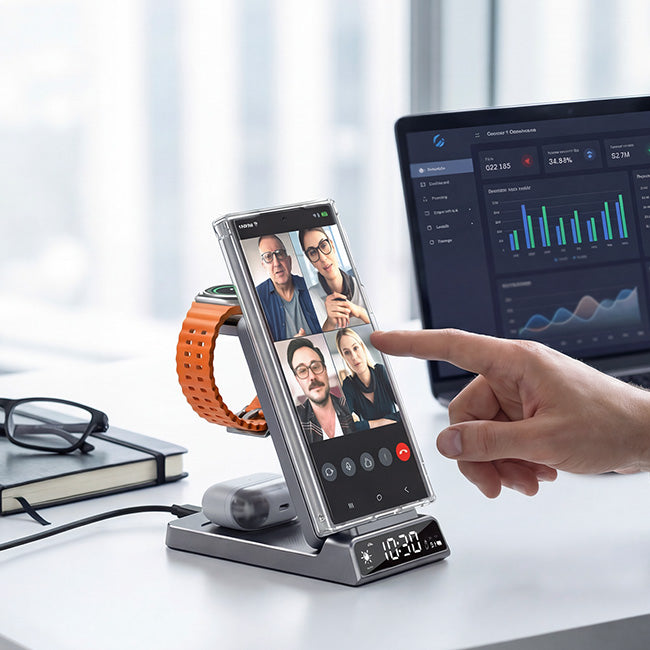
何を選ぶにせよ、これら3つのフィルターを適用してください。「スマホゾーンでの認定Qi2 25W出力」「ゾーンごとの独立した熱管理」「ケース越しでも十分な磁気吸着力」。この3つを基準にすれば、期待外れな製品を導入するリスクはほぼ排除できます。以下の製品リストは、これら厳格な基準をすべて満たしています。
よくある質問(FAQ)
はい。Qi2 25WステーションはQi規格の上位互換となっており、WPC認定ルールに基づき、各端末が自動的に最適な電力レベルでネゴシエーションを行います。
プロトコルは同じですが、ドッキング姿勢が重要です。直立型のスタンドであれば、折りたたんだ状態でサブディスプレイとして機能させることができ、認定済みの磁気位置合わせが厚みのあるフォルダブル端末でもコイルを正確に保持します。
認定規格内であれば安全です。Qi2 25Wは熱規制と電力ネゴシエーションを必須としており、勤務中に60〜90%の範囲を保つことは、毎日ゼロまで放電するよりもバッテリーの化学的性質に対して優しい方法です。
3点です。WPC認定書類(証明書、試験レポート、登録ID)、終日稼働に耐えるゾーン別熱設計、そして最小限のダウンタイムを実現するための先出し保証条件です。
マグネット対応ケースであれば約3mmまで通常通り充電可能です。非常に厚いケースや金属製、手帳型ケースは位置合わせを弱めるため、最速で充電したい場合は取り外すことをお勧めします。
🔋 Z Fold 8時代のデスクに、Elecdovの推奨品
Elecdov CE20S — Samsung向け 3-in-1 磁気充電ステーション
デスクのフラッグシップ:25W+15W+5Wの独立ゾーン、アルミ合金ベース、LED状態表示、FOD(異物検出)保護を備え、最新のフォルダブル端末を使用する役員やホームオフィス向け。
Elecdov CE19S-CF — カーボンファイバー製 3-in-1 磁気充電ステーション
プレミアム耐久性モデル:デザイン重視のデスク向け。優れた放熱性を持ち、一日中の重い充電サイクルにも耐えるカーボンファイバーハウジング採用。
Elecdov CE19S — Samsung向け 磁気3-in-1ワイヤレス充電器
バランスのとれた実用機:3ゾーン充電に時計表示を内蔵。デスクにもベッドサイドにも馴染む定番モデル。
Elecdov WC01A — iPhone向け 3-in-1 磁気充電ステーション
混在環境向け:iPhone、Apple Watch、AirPodsに対応。オフィス内のどの席でも同じように充電環境を提供します。
関連資料
- 2026年ワールドカップとQi2.2ワイヤレス充電:情熱にエネルギーを
- ワイヤレス充電技術の進化:市場環境と2026年の展望
- 2026年夏 旅行用充電ガイド:Qi2.2 25W磁気充電がモバイル電源をどう変えるか
Elecdov編集チームは、ワイヤレス充電規格、デスクの人間工学、企業向けデバイス導入に関する情報を発信しています。この記事の分析には、Wireless Power Consortium(WPC)の公式リリース、Samsung Newsroomの発表資料、IEEEが公開したバッテリー研究を参照しています。


